01
Textile substrates prepared for printing
The result starts with the right material. We prepare textile webbing, elastic tape and other textile products with a surface suitable for sublimation transfer.
Colour printing on material
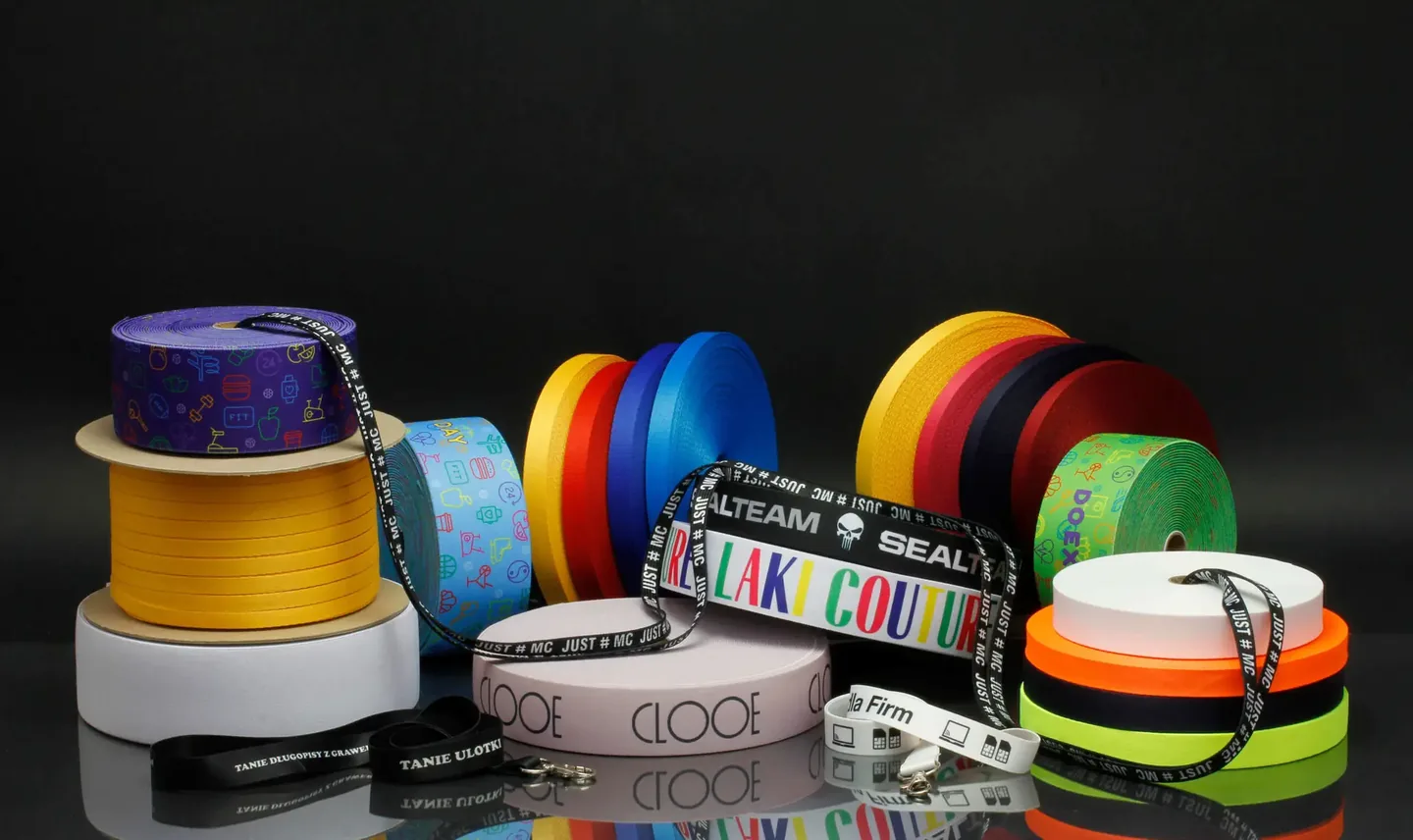
Sublimation printing on textile webbing, lanyard and advertising additives with durable, colour imprint.
Description
The parameters result from the application, method of installation, contact with the user and expected durability.
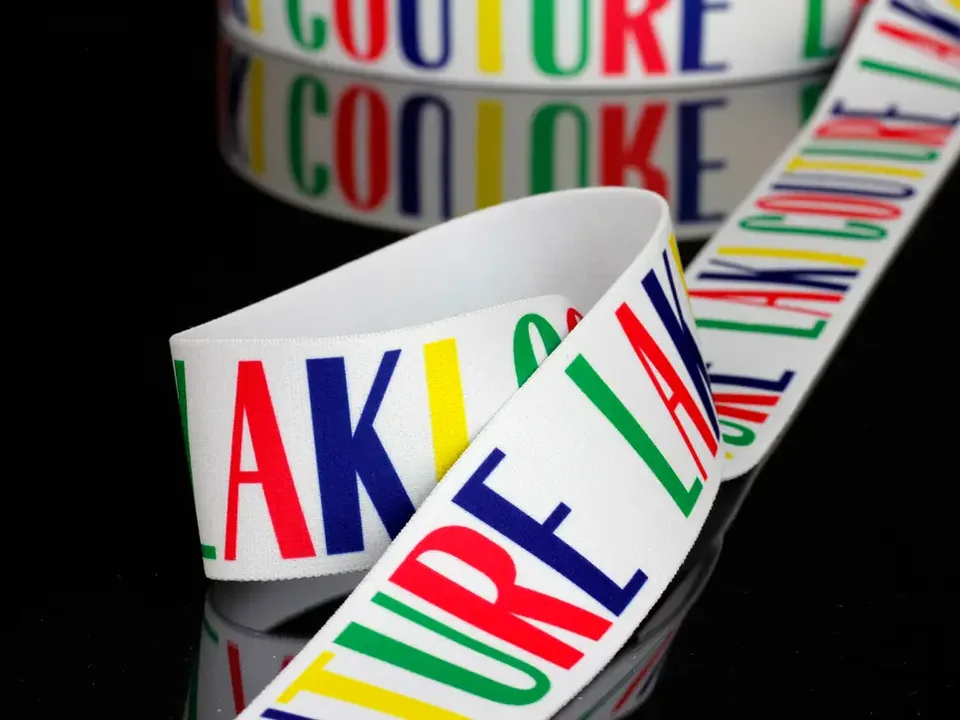
Sublimation allows you to transfer multi-colour graphics to properly prepared polyester material. We use it at textile webbing, lanyard, selected elastic tape, laces and advertising additives. Technology is good with gradients, photography and repetitive patterns containing many colours.
The quality of the printing depends on the entire process: the carrier, material stability, file preparation, temperature, transfer time and color control. Therefore, the material is selected in parallel with the graphic design, not only after its closure. The narrow textile webbing requires a different layout of the logo than a large surface — a report, a margin and a place of subsequent cutting must be taken into account.
Before volume production it is worth to test on the target product. It allows to check sharpness, saturation of colours and behaviour of graphics after bending, stretching or mounting in the product.
Options
Photos show examples of realizations. Material, design, color and finish are selected for the application of the product.
The result starts with the right material. We prepare textile webbing, elastic tape and other textile products with a surface suitable for sublimation transfer.
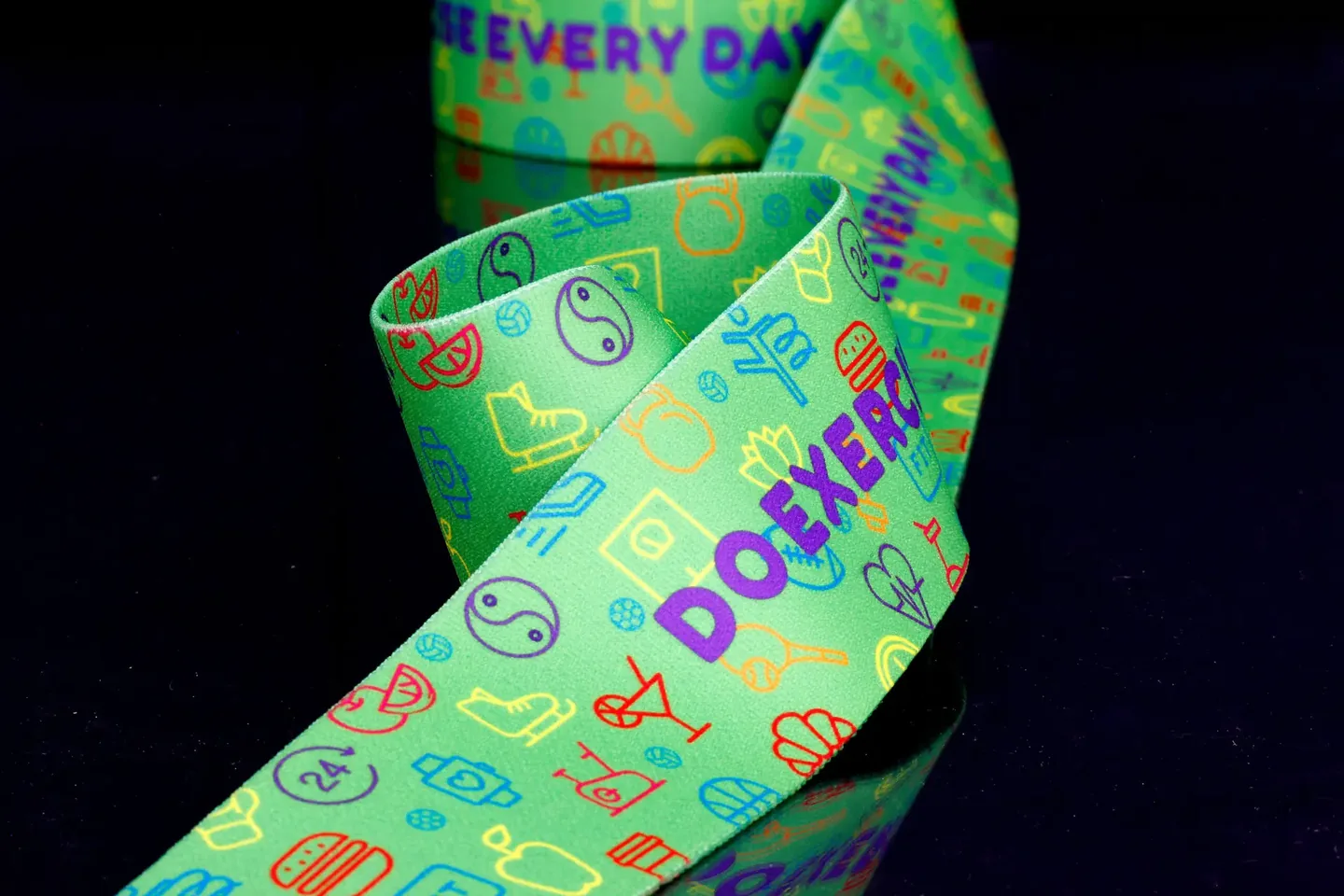
Sublimation works for multicolor projects, gradients, photographs and small details, which cannot be easily translated into SPLOT. The graphics are arranged taking into account the width of textile webbing, the repetition of patterns, margins and cutting sites.
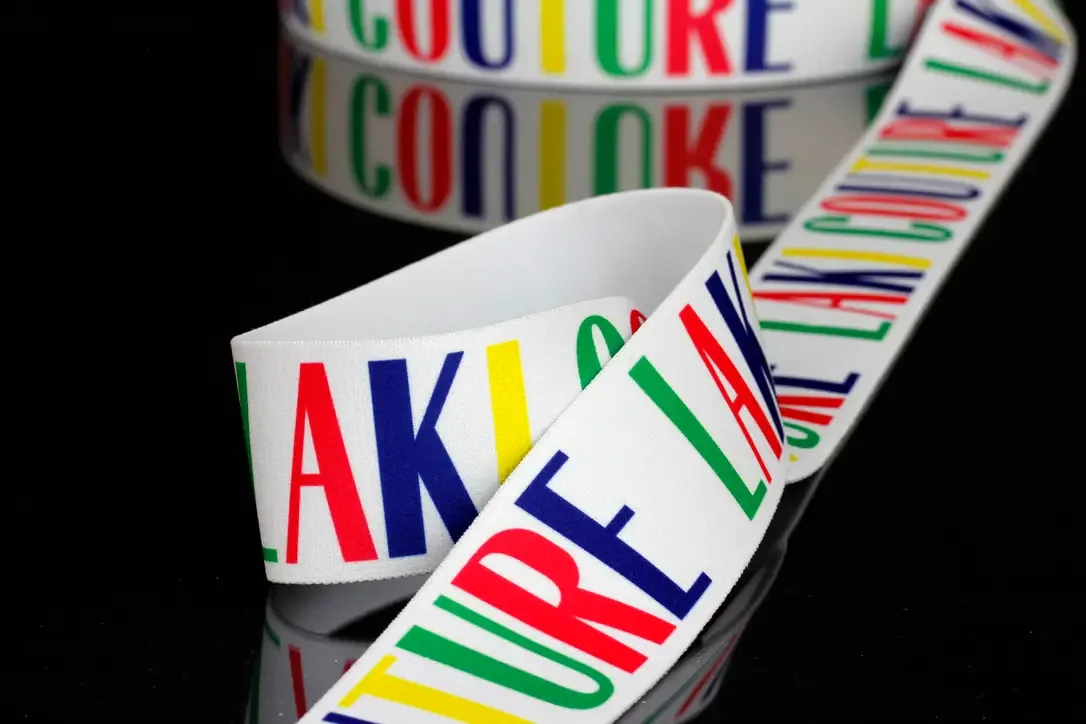
The color on the screen may differ from the effect on the material. Before the series we recommend testing with the target file and media. It allows to evaluate saturation, sharpness, report fit and print behaviour during use.
Parameter selection
A complete briefing allows you to quickly select the technology, prepare the test and reliably value the series.
FAQ
When the project requires full colour, gradients, fine details or graphics difficult to map with jacquard textile weave.
On the properly selected material, the dye connects to the fiber structure. The final durability also depends on friction, washing and conditions of use, so we recommend testing.
Logo is best passed in vector format. In photos you need a raster file with a resolution suitable for actual print size.
Yes, if its substrate and structure are suitable for sublimation, the pattern must also be evaluated when the material is stretched.
Valuation
The most important data are product, width, material, quantity, term, method of use and file with pattern or photo.
No form required
Your email application will open so you can attach a sample, photo, specification or production file.