Design
How to Design a Custom Woven Label
From the legibility of the logo to the way the logo is submitted — decisions worth taking before the test is carried out.
Start with the product, not the logo itself
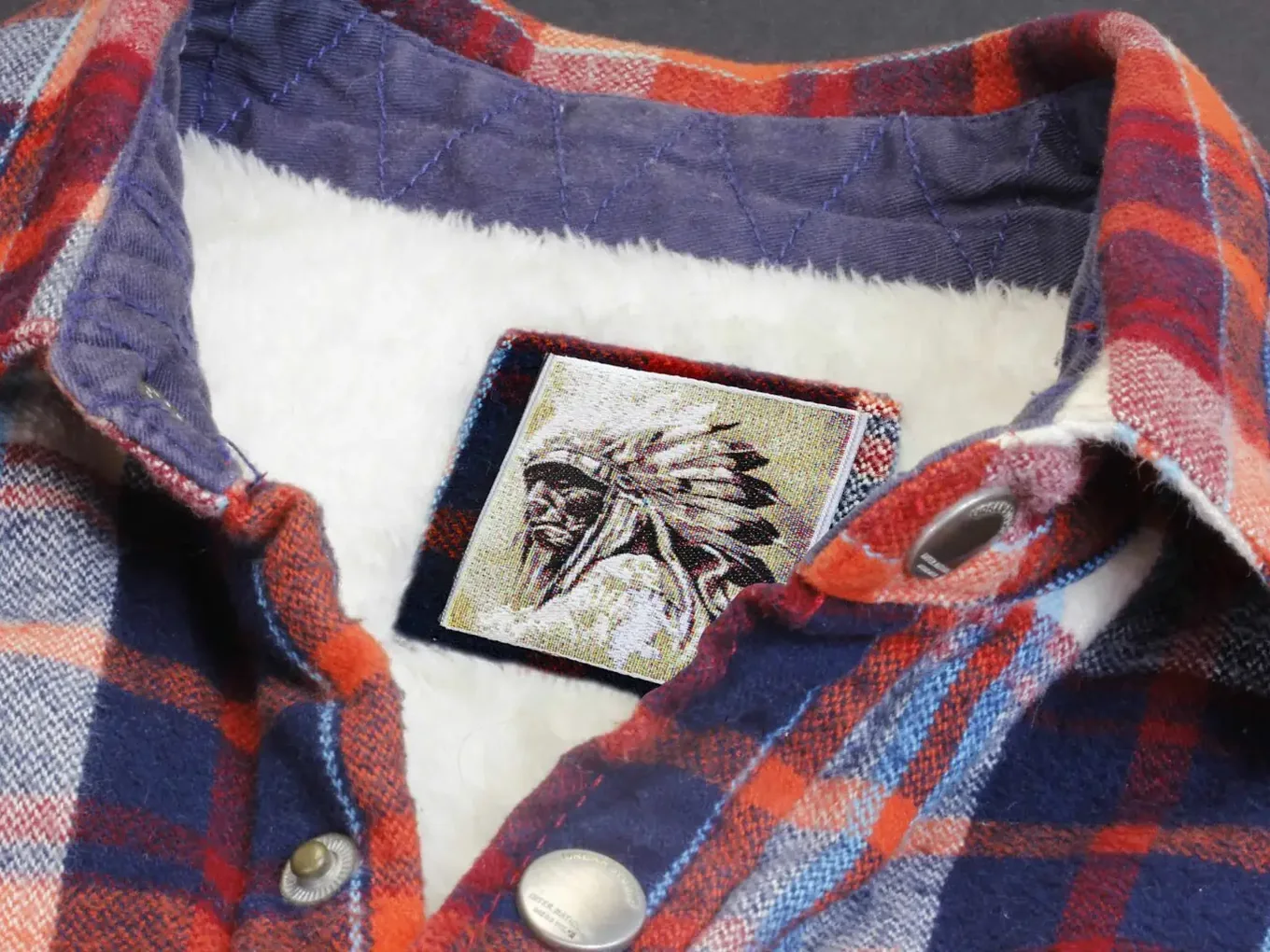
The design on the screen is the starting point, but woven label only works in a specific product. Another format will work on the neck of the T-shirt, another on the side seam, cap, shoe or bag. Before designing, fix the assembly site, visible surface and whether the element will touch the skin.
In the briefing it is worth showing a photo of the product or a drawing with a marked place of stitching. This allows the manufacturer to choose the direction of weave, technological margin and way of finishing edges.
Size and legibility after weaving
The thread does not map the graphics like a pixel or paint. Very thin lines, small counters in letters and subtle gradients can disappear after the project has been converted into a woven structure. It is safest to evaluate the mark in the target size and simplify details that do not build visibility.
Enter two dimensions: total dimension before folding and field visible after stitching. Also leave a seam allowance. If one label is to support several sizes or collections, set variant before preparing the weaving program.
- Vector file PDF, AI, EPS or other agreed format
- Before folding and visible
- Reference colours and acceptable tolerance
- Number of variants, volume and expected date
Folding and finishing method
A straight-cut woven label is sewn in a suture or sewed on a surface. A centre-fold label is folded in half, the end fold has rolled up ends, and the mitre fold forms a loop with corner folds. The choice simultaneously affects the design, comfort and way of sewing.
Edges can be finished depending on material and geometry: hot, ultrasound or laser cutting. Self-adhesive or thermoactive solutions are also possible, but their selection must be linked to the substrate, application temperature and method of use.
Colour, handle and production sample
Thread colour should be approved on a physical sample or sample, because the screen does not show the same gloss and texture of the yarn. With label touching the skin, softness, density of weaving and edge are also important.
The test allows you to evaluate readability, proportions, color and behavior after folding before starting the entire batch. In volume production, keep the approved variant number well in order for repeat orders to refer to the same pattern.
Enquiry checklist
A complete briefing reduces the number of corrections and facilitates comparison of variants. If you do not know the technological parameters, describe the application and effect and the manufacturer will propose a solution for verification.
- Product and exact place of stitching
- Format, dimensions, folding and mounting
- Logo, text, size and number of language versions
- Expected grip, skin contact and washing method
- Number of pieces, method of packaging and date of implementation
Frequently asked questions
Does the logo need to be simplified?
Not always. The need for simplification is determined by the target dimension, line thickness, colour number and type of weave. It is best to evaluate this on a technological visualization or sample.
Which file format to upload?
The most useful is the vector file, such as PDF, AI or EPS. If you do not have it, send the best available material and specify the target dimension.
Is the sample needed?
The test is particularly valuable with a new pattern, a small detail, an unusual folding or a large series. It allows you to approve the effect before production.