
Materials
Cords and Shoelaces for Volume Production
Cross section, SPLOT and ending decide how the string works in a tunnel, eye or ready shoe.
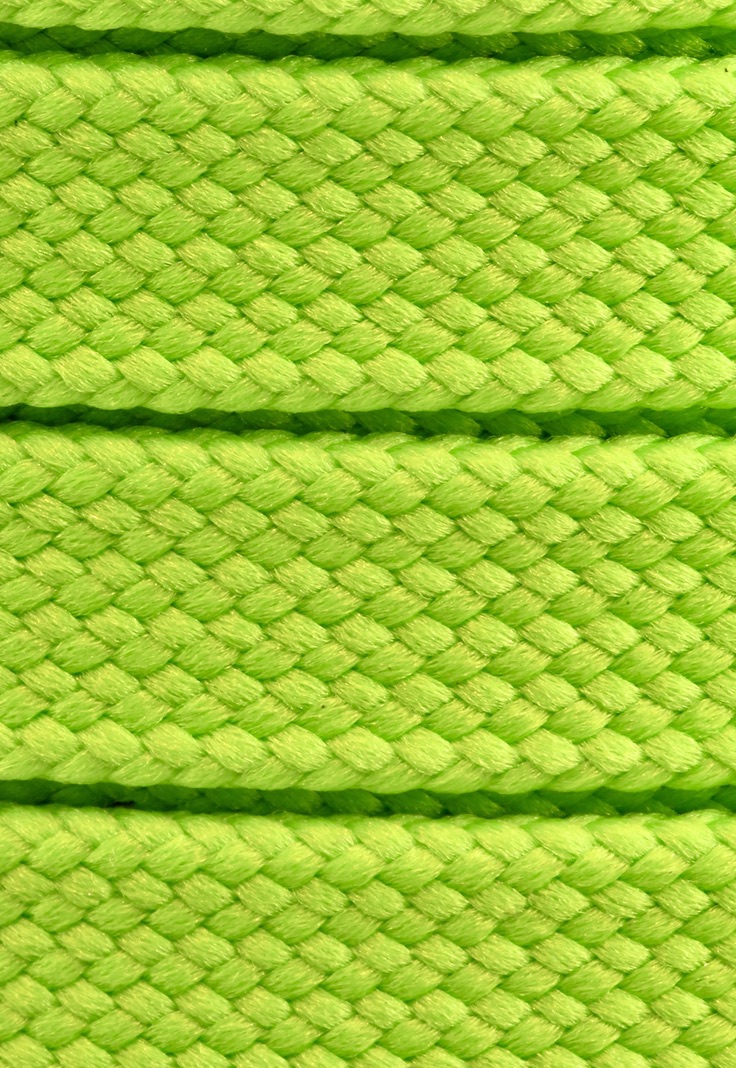
Round, flat, plaited or knitted
The shape and design affect the friction, softness, stability and behaviour in the tunnel or meshes. The round cord moves easily in the guide, flat gives a larger surface and a strong visual effect, and the rubber cord works flexibly. The braid and the knitted structure can vary by grip even with a similar dimension.
Macrophotography of the weave well shows that the nominal diameter does not describe the entire product. It also counts the density, the type of fiber, the core, the braid and the way the surface is finished.
Application and material
Cord goes to sweatshirts, jackets, trousers, bags, bags, shoes, outdoor, advertising and technical products. In each of these applications, priorities differ: comfort, friction, resistance, appearance or cooperation with the regulator.
Polyester and polypropylene are common materials for use, cotton gives a natural grip, and special fibres are used according to technical requirements. Selection should not be based solely on the name of the raw material, the design may be equally important.
Drawcords and aglets
With shoelace the length, cross-section, thickness, colour, elasticity and type of tip must be determined. Aglet protects the end and facilitates the passage through the mesh. Its length, diameter and material must match shoelace and shoe components.
It is best to evaluate the test in the target shoe: during binding, after tightening and after multiple passages through the meshes. In a collection with several sizes it is worth preparing a table of length for each variant.
- Product type and place of application
- Cross section, diameter or width
- Material, color, flexibility and expected grip
- Length of segment and type of ending
- Number of variants, packaging and volume
Personalisation and repeatability
Color, melange, contrast braid or marking tip can support brand identification. However, each variant should remain functional in the target product.
After acceptance, keep the sample code, parameters and color pattern. This facilitates housekeeping and check the compatibility between collections.
Frequently asked questions
How to choose the length of shoelace?
The length depends on the number of pairs of meshes, the method of stringing, the height of the upper and the expected length of the ends after tying. safest is the test in the target model.
Can string be flexible?
Yes. Elastic cord combines the flexible core with the braid. The scope of operation and return must be matched to the regulator and application.
Is one color enough as a pattern?
For critical color it is best to keep an approved physical sample. The same code displayed on two screens is not a sufficient basis for reception.